
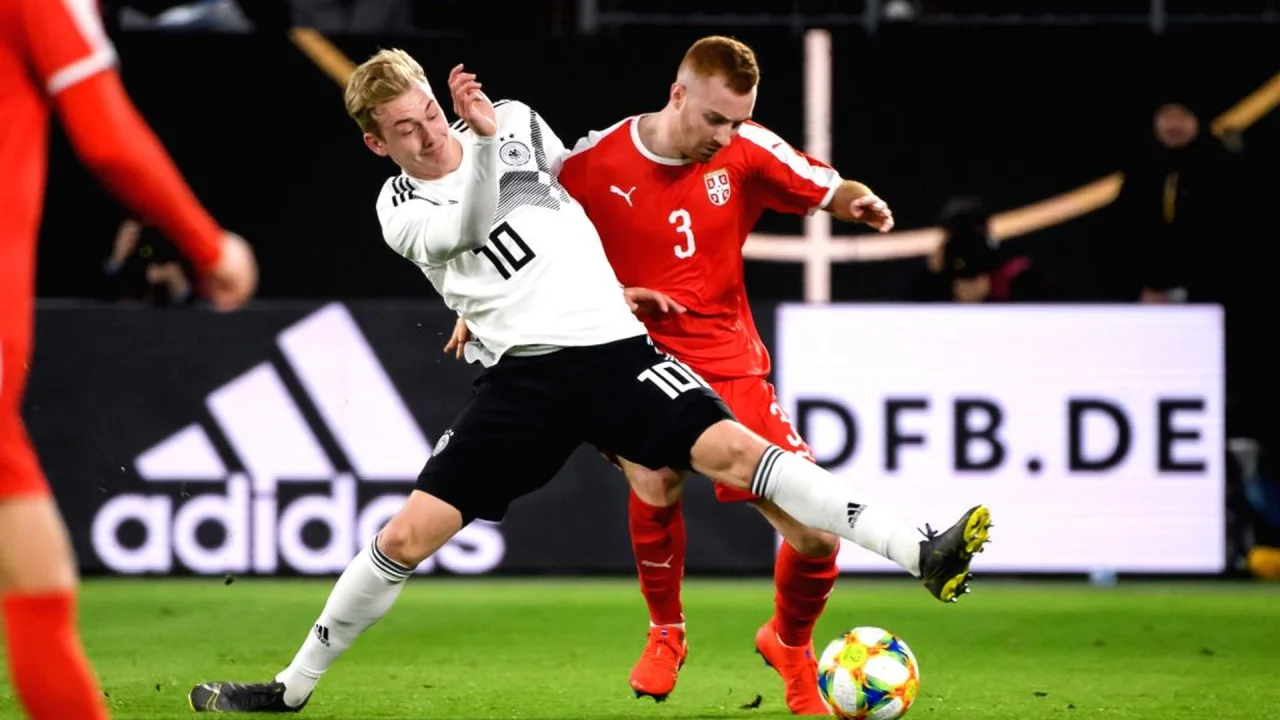
Germany host Serbia in Munich tonight with pressure already attached to the third match of Group A2. Germany drew 1-1 with the Netherlands and then lost 1-0 at home to Greece. Serbia were beaten 2-1 by Greece and the Netherlands in Belgrade. Neither side can repair the whole group table in one evening, but the first victory would replace a difficult opening week with a clear route into Sunday’s fourth round.
Germany need possession that moves the Serbian block
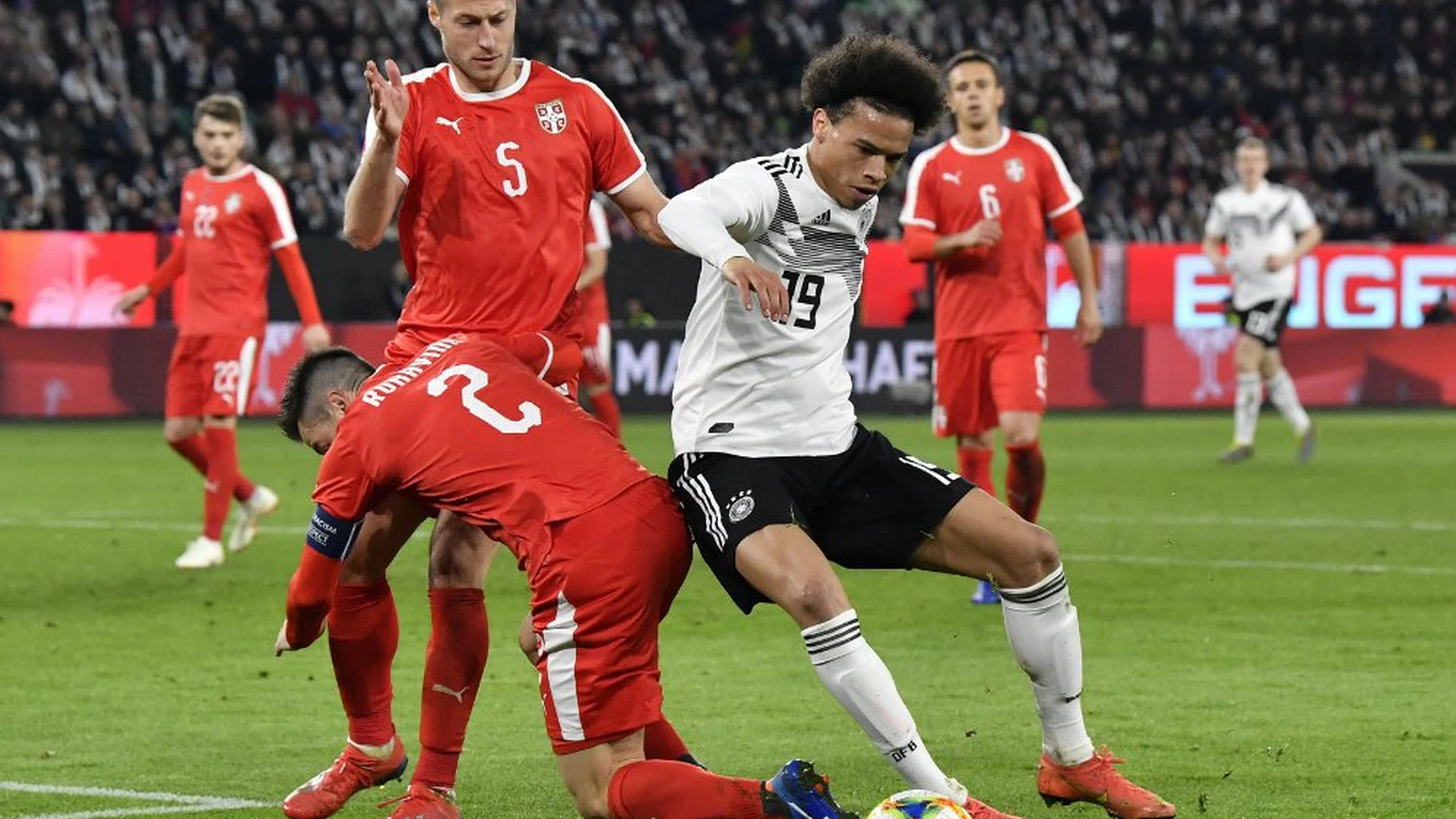
Germany have had enough of the ball to establish territory, but territory without changes of angle allows a compact defense to stay comfortable. The useful movement is not another pass across the same line. A midfielder must receive behind Serbia’s first pressure, turn, and force one centre-back or holding player to leave his position. That step opens the next pass instead of merely moving the entire block from side to side.
Width can create that moment if the winger stays outside long enough to stretch Serbia’s wing-back or full-back. The pass inside should arrive after the defender has committed, not before. Germany can then combine through the half-space or release an overlapping runner. If both players occupy the same lane too early, Serbia can defend two opponents with one body and preserve numbers around the penalty area.
Serbia’s substitutions have already changed games
Luka Jović scored against the Netherlands less than a minute after entering at half-time. The goal showed that Serbia can alter the reference point in attack without abandoning the rest of the plan. A fresh forward who attacks the six-yard area can turn a controlled crossing position into a chance, while another striker can occupy the centre-backs or move away to receive.
The challenge is to create that presence before falling behind. Serbia cannot rely on a rescue substitution every night. An early route into the forward, followed by support from the nearest midfielder, would let the visitors test Germany’s confidence. Even when the first pass is not clean, the second ball can establish an attack and give the defensive line time to move away from its own goal.
| Equipo | First two Group A2 results |
|---|---|
| Alemania | 1-1 Netherlands; 0-1 Greece |
| Serbia | 1-2 Greece; 1-2 Netherlands |
| Estadio | Munich |
| Inicio | 20:45 CET |
| Próximo partido | Greece vs Germany; Netherlands vs Serbia on October 4 |
High pressing works only when the midfield moves with it
Both teams can press high, but the first runner is useful only when the space behind him is protected. Germany will try to tempt Serbia forward and find the free midfielder. Serbia can prevent that by moving the striker and attacking midfielder together, with the holding line ready to step into the next receiver rather than waiting near the box.
Germany face the same problem when Serbia build through the goalkeeper. If one forward chases alone, the visitors can pass around him and attack an exposed midfield. A curved run that blocks the return pass is more valuable than raw speed. The objective is to direct the ball toward the touchline, where an extra defender can join without leaving the center open.
Set pieces can settle a match with little open space
A tense group match may produce fewer clean attacks than either side wants. Corners and wide free kicks then become a controlled way to place the ball near goal. Germany can use movement across the near-post zone to free a second runner, while Serbia’s height gives them a genuine target if the delivery clears the first defender.
The defensive detail is the next touch. A headed clearance that falls centrally can be more dangerous than the original cross. One midfielder should protect that area while the rest of the line attacks the ball. On attacking set pieces, both teams also need enough cover to stop the opponent’s fastest outlet from turning a blocked delivery into a long counterattack.
The table makes patience more important, not less
Germany have one point and Serbia none, so an early mistake would increase the emotional weight of every later pass. That is exactly why the opening should be simple. Secure possession, clear communication and one well-supported press are better foundations than trying to produce a decisive moment in the first five minutes.
As the match develops, the coaches can use the table differently. A draw does little for Serbia, especially before an away game in the Netherlands, while Germany travel to Greece next. The final half-hour may therefore open even if the first half remains cautious. The team that keeps its structure while increasing risk will have the better chance of turning pressure into the first win of the campaign.
Comentarios
Aún no hay comentarios — sé el primero en compartir tu opinión.